 Log In


 Log into Online Banking
 New Tripoli Bank is proud to announce that Matthew Koncz, Assistant Vice President and Controller, has been appointed to the Board of Directors of the Northwestern Lehigh Educational Foundation.
Matthew has been an employee of New Tripoli Bank since April 8, 2019, when he was hired to fill the position of Controller. He was promoted to Assistant Vice President in December 2022. In addition to his role as Controller, Mr. Koncz is a licensed Certified Public Accountant. He intends to take over the role of Treasurer for the Northwestern Lehigh Educational Foundation Board later this year. Regarding his appointment, Matt commented, “I look forward to working with the NWLEF to continue improving the educational infrastructure in our district’s schools. As the father of two children who are about to enter this school system themselves, I understand the importance of the Foundation’s mission and providing opportunities for students’ futures.”
New Tripoli Bank has been a longtime supporter of the Northwestern Lehigh Educational Foundation donating annually through the Educational Improvement Tax Credit (EITC) Program. The Bank supports the Foundation in its mission to provide educational opportunities for students in the Northwestern Lehigh school district as part of our broader support for education in our local community.
 February is the month of love: what better time to think about you and your partner’s finances? One of the most fundamental parts of any relationship is mutual understanding, whether that means knowing each other’s hobbies, pet peeves, or financial situation. While it seems inevitable that you and your partner would want to do everything as one—after all, you already live together, eat together, and watch TV together—opening a joint bank account is a serious decision with layers of emotional, financial, and sometimes legal implications.
Like any financial decision, the choice to open a joint account requires a thorough understanding of you and your partner’s financial goals, as well as the benefits and drawbacks of sharing a bank account. Once both of you understand the pros and cons, you can make an informed decision about whether a joint account is right for you.
Pros of a Joint Bank Account
The first question you must ask yourself is, “Would we benefit from a financial partnership?” Most finance experts answer that question with a resounding, “Yes.” There are a number of benefits that are immediately apparent to anyone considering opening a joint bank account. Joint accounts simplify a couple’s finances by ensuring all their bills are paid from one source. It reduces the number of accounts you need to track in your monthly budget and paints a clearer picture of your finances.
In addition to these benefits, opening a joint bank account is great for fostering trust and openness between partners. By opening a joint account, you are telling your partner that you trust them with your money and treating them as an equal. Of course, this assumes you have communicated your expectations with your partner.
Before you decide to open a joint account, discuss your income, expenses, and financial goals with your partner. Establish ground rules and agree on how the account is to be used. Decide on each person’s responsibilities and talk about how you as a couple will handle any situations that may arise, such as overdrafts or debts. Come up with a joint budget using the account and decide what should be done with any excess funds left in the account at the end of each month.
Through effective communication, a joint checking account can solidify an already-strong partnership by fostering mutual trust.
 Cons of a Joint Bank Account
Like anything in life, a joint bank account comes with tradeoffs and should not be undertaken without careful consideration. A joint bank account is subject to debt collection for both partners for the full amount of the account, whereas money kept in separate accounts is not subject to creditor collection in the event of unpaid debts by your significant other. If you or your partner have a history of debt issues and nonpayment, it is probably in your best interest to keep your bank accounts separate.
More broadly, by sharing a bank account, you lose some of the privacy that comes with maintaining your own personal account. Both account holders have access to the account and by extension the account statements, so both will be able to see all purchases made using the account. There is also no stopgap between either account holder and their funds; meaning both account holders have immediate access to potentially all of the funds in the account. This can be extremely difficult in the event of a divorce, as either spouse could pull all the funds from an account, leaving their former partner with nothing.
Combining Joint and Separate Accounts
For some couples, the best course of action may be maintaining two separate accounts as well as a joint bank account.
One option would be to have paychecks deposited into a joint account for use with bills, groceries, and other household needs, but then at the end of each month, whatever isn’t spent on necessities is divvied up between both partner’s individual accounts for discretionary spending. Another option is to do the reverse, having each spouse deposit their paychecks into their individual accounts, but both agree to transfer a set amount each month into the joint account to pay bills.
 No matter what option you choose, I cannot emphasize enough how important healthy communication is between partners before they make any huge financial decisions including opening a joint bank account.
How to Open a Joint Account
Opening a joint bank account is similar to opening your own bank account. You’ll still provide full names, government ID, Social Security numbers, etc., with the additional step of providing that same information for your partner. New Tripoli Bank offers online account opening for joint accounts, or you can reach out to one of our helpful Community Bankers who can guide you and your partner through the process of opening a joint account and linking it with your existing individual accounts.
 Mike Koch is New Tripoli Bank's Business Development Manager and has previously served as a Branch Manager and Assistant Branch Manager. He has been a member of the New Tripoli Bank team for 20 years and has decades of experience working with business customers.
Tax Day is fast approaching and with it, scammers are crawling out of the woodwork to cheat honest taxpayers out of their money.
Remember the old adage: "If it sounds too good to be true, it probably is!" Steer clear of anyone offering a way to "cheat" the tax system to get rich quick or avoid your obligation as a citizen of the United States to file your tax return and pay any outstanding taxes. Some of these schemes can literally cost you your life savings, while others can result in prosecution or imprisonment if you knowingly participate in them.
Abusive Return Preparer
Be very careful when selecting a business to help prepare your taxes. While there are plenty of reputable tax professionals that offer excellent service for their clients, there will inevitably be a few bad eggs who file false or fraudulent tax returns in order to defraud their clients.
Even if someone else prepares your return, the final responsibility for the accuracy of your tax return ultimately falls upon you. Check the credentials of your tax professional before relying on them to prepare you returns. Some red flags to watch out for include:
- A preparer asks for cash-only payment without providing a receipt.
- They claim fake deductions to inflate the size of your refund.
- The preparer invents false income in order to get their client more tax credits.
- They prepare your tax return but refuse to sign or include their IRS Preparer Tax Identification Number.
- Your refund is directed into their bank account rather than yours.
Abusive Tax Schemes
Anyone who browses social media for any amount of time will encounter people claiming they know a "cheat" or "workaround" that consumers can use to avoid paying taxes or to obtain a tax benefit. These schemes can take many forms, including:
- Offshore Tax Havens - Fraudsters create shell companies or trusts in these "tax havens" to hide income and assets offshore. These can also take the form of bank accounts in offshore tax havens, or money invested into digital assets such as cryptocurrency.
- Loan Schemes - Directors receive their income in the form of loans without any intention of ever repaying the loan, in order to avoid payroll taxes.
- Ponzi Schemes - Many Ponzi schemes claim the returns they generate are tax-free or that any losses you incur as part of a Ponzi scheme can offset your tax burden.
- Phantom Trusts - These are trusts set up for the sole purpose of claiming fraudulent deductions on tax returns in order to avoid paying taxes.
- Abusive Retirement Plans - These look like normal retirement plans but do not comply with tax laws, leading filers to claim improper deductions.
Non-Filer Enforcement
You may have come across a social media post or video featuring someone arguing that taxes are voluntary or illegal. They quote some part of the U.S. Constitution or U.S. Case Law to argue their point in order to bolster their argument.
Remember: you are (probably) not an attorney specializing in tax law, and this person making these claims most likely isn't either. Courts have repeatedly rejected these arguments as frivolous and routinely impose financial penalties for raising these arguments. Taxes are a mandatory part of living and working in the United States.
To help the public recognize and avoid abusive tax schemes, the IRS offers an materials for consumers to educate themselves. Familiarize yourself with the basics and report any suspicious activity to the IRS. You can learn more here: https://www.irs.gov/help/tax-scams/report-a-tax-scam-or-fraud
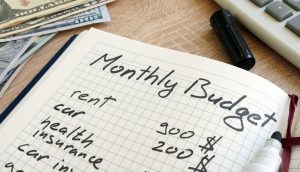
Whether you’re repairing a bike or preparing a budget, it’s important to have the right tools for the job. As modern consumers, we are lucky to have a wealth of financial tools at our disposal that our parents could only dream of. These days, savvy consumers rely on apps to track and control their monthly spending habits.
Moreover, you don’t need to break the bank to find the right tools for tracking expenses and monitoring income. That being said, some people find it easier to stick to tried-and-true pen and paper budgeting, or other physical methods, which is perfectly fine if it works for you!
Here are some simple, free (or cheap) budgeting tools you should consider adding to your toolbelt to help you achieve financial wellness.
The Envelope System
We start off with an old system that many find dependable both as a means of budgeting as well as restricting your ability to overspend your income. The envelope system is exactly what it sounds like: you take a stack of envelopes labeled with major budget categories, such as groceries, clothing, bills, and loan payments. As your paychecks come in, you put a set amount of cash into each envelope and only take the money out of each one to pay for the specific budgeting category indicated on the envelope. At the end of the month, any cash remaining in these envelopes can be put into long-term savings.
This method is perfect for visual learners. You see the piles of money slowly diminishing over time and get a feel for which budget categories you may be spending too much on. Just be careful how much cash you take out of your bank account at any one time and make sure not to lose your envelopes. Remember: your money will always be safer kept with the bank.
Goodbudget is an app that allows you to practice the envelope system without needing physical cash or envelopes. The app doesn’t connect to your bank accounts, so there’s no need to worry about additional security risks. Instead, you manually add your account balances, cash amounts, debts, and income to your digital “envelopes,” and update the app whenever you spend money.
 Spreadsheets
In terms of customization, nothing beats an old-fashioned spreadsheet. Most computers come with Microsoft Excel or a similar spreadsheet program installed, though there is a bit of a learning curve to effectively using these programs. Thankfully, Microsoft provides free online training on its support website for Office products.
You can also find free budget templates online both from Microsoft Excel and Google, as well as websites like Moneyzine and Vertex42. These templates come with built-in formulas that automate calculations, streamlining your budgeting process and reducing the likelihood of errors.
Mobile Banking Tools
Modern financial institutions offer their customers a plethora of tools through their mobile banking apps. With New Tripoli Bank’s mobile banking app, you can easily track your monthly spending and income and export that data for use with other budgeting tools.
One of the best budgeting tools offered by mobile banking apps is automated bill payments. A busy schedule can make it difficult to stay on top of your monthly bills; by automating this process, you can plan your other spending around your payment schedule and also set up alerts in the app to let you know when scheduled payments are about to be sent.
Third Party Budgeting Apps
There are plenty of free apps you can download to assist in your budgeting process.
Money Left Over, or Achieve MoLO, is a new ad-free app from Achieve that connects all of your financial accounts to automatically track spending and organize it into categories. The app analyzes your monthly budget and uses it to predict how much money you will have left at the end of each month. You can use these numbers to set savings targets for yourself for each month.
Another app I would like to shout out is Honeydue, which is a budgeting app designed for couples. Both partners can sync their bank accounts, credit cards, loans, and investments and the free version of the app automatically categorizes expenses while allowing users to create custom categories as well. You and your partner can set up monthly limits on each of these categories and Honeydue will send alerts when you or your partner are nearing them.
These are just some of the tools you can use to help get a handle on your budget. If you’re not sure where to start, you should reach out to New Tripoli Bank and speak with one of our friendly community bankers who can help point you in the right direction.
Disclaimer: The apps mentioned in this piece are only suggestions and have not been endorsed by New Tripoli Bank. Please use discretion when deciding which apps to download.
 Patricia Metzger has been working for New Tripoli Bank since 2010 and has worked many roles including Teller, Assistant Branch Manager and her current role of Branch Manager of our New Tripoli Office. She has over a decade of experience helping our customers with their financial concerns and budgeting.
With 2024 in the rear view mirror and 2025 up ahead, John Hayes, CEO of New Tripoli Bank, wanted to take a moment to discuss the state of the economy, the Lehigh Valley market, and the community banking industry in the New Year. What can you expect in the upcoming year? Watch our end-of-the-year vlog to find out!

Click to view
The holiday season is a time for thankfulness, togetherness, joy, and cheer. It's also the time of year when consumers need to be most vigilant of fraud, scams, and cyber-attacks! Stay on guard this holiday season so one of these common scams doesn't ruin your holiday plans.
This Season's Hot New Scams
Scammers are always looking for new ways to defraud people of their money and personal information. Whether it's modern technology or increased awareness of older scams, swindlers' methods are constantly evolving and adapting. Here are just a few of the newer scams we've seen in recent years:
Social Media Scams. As you scroll through the endless feed of content on your social media platform of choice, you'll come across hundreds of links that will take you off the platform to other websites. You need to be careful when clicking an external link on social media: it could be directing you to a scam website or even worse sending you to a site that will download malware onto your computer.
Before you click a link to an interesting news article or a remarkable offer on some product you were considering purchasing, take the time to instead search for that news story on a reputable news website or find that product on a trusted retailer's webpage.
Look-Alike Websites. Scammers are getting better at spoofing existing websites with the intent of capturing your account information or downloading malware onto your computer. Always double-check the URL of any website you visit. Scammers can create sites with URLs that look remarkably similar to those of legitimate sites. Make sure you're on Amazon.com, not Arnazon.com!
Fake Travel Booking Sites. Nothing ruins a holiday vacation like reserving your trip on a fake booking site. Scammers take advantage of common phrases and keywords to have their fake booking sites appear in search results for consumers looking for deals on popular travel destinations or through pop-up ads on vacation and travel blogs. When providing personal and financial information via the internet, always make sure you're on a legitimate business' website.
Compromised Account Alerts. You receive a surprise message on your phone claiming that your account has been compromised and instructing you to click a link to resolve the issue. You’ll feel the urge to click the link as soon as possible in case your information may be at risk—and that's when they get you! Scammers often use panic to stop you from thinking rationally in the moment, long enough to get you to surrender account information.
Financial institutions (New Tripoli Bank included) will never ask you to provide account information over the phone or via a link in a text message. When in doubt, you can contact whatever business the text message is claiming to represent in order to see if the alert is legitimate.
New Wrapping Paper, Same Old Scams
Not all scammers are reinventing the wheel this holiday season. In addition to the aforementioned schemes, many con artists fall back on classic scams updated with a new coat of paint, taking advantage of advances in communications technology to further obfuscate their true intentions from unsuspecting victims. Here's a refresher on some of the most common scams you'll encounter:
Gift Card Scams. Who doesn't love gift cards? I'll tell you who—government agencies, legitimate businesses, and financial institutions. If you receive a message from someone claiming to be from the government or some business to whom you owe money and they start asking for gift cards, this is an immediate red flag! Once your money has been put onto a gift card, it's impossible to recover in the event of a scam. That's why scammers love asking for payment in the form of gift cards.
Charity Scams. 'tis the season of giving, but unscrupulous scammers see the opportunity to take advantage of others' kindness in order to trick them out of their money. One common scam is being contacted by a fake charity thanking you for a donation you never made and then rushing you into providing payment. These fake charity scammers also rarely mention how they plan to use your donations to help those in need—since your money will never make it to them!
Always research any charity you intend to donate to, and never send donations in the form of gift cards, wire transfers, or cryptocurrency; all of these methods are hard to trace and impossible to recover your money from.
Package Delivery Scams. While these scams happen throughout the year, they are especially pernicious during the holidays when it is more likely consumers are on the lookout for updates on their package shipments. You'll receive a call or text from someone posing as the US Postal Service or other delivery service that will include a fake tracking link. The link will take you to a site requesting personal information, or it will download malware onto your device.
Fake Gift Exchanges. A variant of the old "pay in advance" scam, this scam asks you to join an online gift exchange, where you buy a $10 gift for a stranger with the promise of receiving many gifts from other participants in the future. Some of these function as pyramid schemes, asking you to contact additional participants in order to keep the grift going. Just use common sense when someone you don't know is asking you for money and respectfully decline.
Emergency Scams. One of the most common methods scammers use to get you to fall for their swindle is to create a sense of urgency or panic in order to keep you from taking the time to think about what they're asking you to do. One of the best ways to create this sense of urgency is to pretend to be a friend or family member in an emergency, such as a car accident or police arrest. These scammers will ask you to send them money in order to resolve their fake emergency, then disappear with your money. Oftentimes, these scammers will browse your social media in order to learn enough about your personal life in order to pretend to be a friend or family member.
Before you send any money, you should verify the person's story with another friend or family member. Ask questions of the caller that would be difficult for an impostor to answer correctly. Also, if they ask you to send them gift cards or wire money—that is an immediate red flag that this is a scam!
Puppy Scams. Pets can make great gifts but come with a lot of caveats. Fake pet sellers are a common issue for online marketplaces such as Facebook marketplace, where scammers post stock photos of animals looking for people who want to buy a pet, take their payment, and never deliver a furry friend. If you're thinking of gifting someone a pet for the holidays, you can take steps to make your transaction safer, such as asking questions of the seller, requesting to meet them in person, and requiring documentation.
What You Can Do
- If you feel that someone is trying to scam you, don't respond! Delete the email, hang up the phone, or trash the text message and block the email address or phone number that sent it.
- If you provide a scammer with personal or financial information before you realize you're being scammed (account numbers, date of birth, online banking username, passwords, etc.), contact your financial institution or other affected businesses immediately.
- Update your login credentials for any affected accounts as soon as possible. Enable multi-factor authentication on any site that offers it.
 Another year is almost over, and we are less than two months away from Christmas! With the holiday season fast approaching, many of us are already getting a head start on our present shopping. You may find yourself stumped as to what gifts you can give that are meaningful without taking a sizeable chunk out of your bank account. I'd like to share some helpful hints that will make your gift-giving this holiday season pleasurable and affordable.
Budgeting for Gifts
The first step in planning your gift giving is deciding who your recipients will be. Start by compiling a list of every person you intend to buy gifts for, including children, spouses, siblings, parents, friends, neighbors, and coworkers. The earlier you put together this list of gift recipients, the more time you have to brainstorm gift ideas for each one.
Next, you want to set a budget. Determine how much you're willing to spend, then place a dollar amount next to each name on your gift list and calculate the total. Adjust the dollar amounts up or down depending on whether you're over or under your intended budget. This gives you a clear idea of how much you can spend on each person on your list.
Now it's time to decide on what to give.
 Brainstorming Gift Ideas
Don't be afraid to ask your giftees what they would want (or need) for a present. As much as it's nice to surprise your friends and family with an unexpected gift, you don't always know what they actually want. By asking, you are insuring you gift them something they will enjoy or actually use.
Get creative! You can make any gift thoughtful with a bit of effort. Even for less expensive items, such as a bottle of wine or a box of your spouse’s favorite chocolates, you can make your gift that much more special with minimal work by adding a bit of decoration like a cute ribbon or gift tag.
Think about the practicality of your gift: is this something the recipient will use? For example, if your mom loves to spend her free time in the kitchen baking, you could create a personalized "baking basket" filled with baking supplies such as a mixing bowl, cookie mixes, measuring cups, and anything else you think a hobbyist baker might use. To help stay within your budget, you can purchase most of these supplies at a dollar store or wait for your local shops to put these items on sale.
Make sure you take advantage of sales and coupons. A lot of stores now offer digital coupons through apps, which is a great way to help you save when holiday gift shopping.

Create a Coupon Book
A great free option is to give a coupon for an act of service. The gift of free time can be more meaningful than anything money could buy.
Maybe you have a son and daughter-in-law with young kids who haven't had a night out in several months; you could give them a coupon for a free night of babysitting. Perhaps your grandfather doesn't like shoveling snow; gift him a coupon for snow removal. Are you a great cook? Offer a friend or family member a coupon for a homecooked meal.
There are plenty of examples of these kind of "gift coupon books" online to help inspire you, and you can customize them to the needs of the gift recipient. This gift is great because it shows thoughtfulness about the gift recipient while also not costing you any money, instead you're giving the gift of your own time. Plus, you can get as creative as you want DIYing the coupons and putting together a fun, festive coupon book.
No matter what gift idea you come up with, remember it's the thought that counts. You don't need expensive or extravagant gifts to let someone know you care.
 Beth-Ann May is an Assistant Branch Manager at New Tripoli Bank and has been working for the Bank for over seven years. Outside of the office, she enjoys spending time with her husband and young daughter.
This past Saturday, New Tripoli Bank employees headed to the Lehigh Valley Zoo for our annual company picnic! We didn't let the weather bother us as employees and their families came out to see the animals. Zoo staff brought out a turtle, penguin, and armadillo for a close-up animal encounter that the kids loved, and we raffled off gift baskets for our employees while everyone enjoyed a catered dinner. It was a fun-filled evening that let everyone unwind and enjoy one another's company outside of the office.





Mental health and financial wellness are two topics that may seem separate but are actually closely related to one another. The concept of financial wellness encompasses your ability to manage your finances. Strong financial wellness is achieved through developing sound money habits, budgeting, and understanding your financial situation. Studies have shown that when a person fails to achieve a strong state of financial wellness, it can negatively impact their mental health.
Financial Stress & Financial Wellness
Stress can lead to issues with both mental health and financial soundness. Stress tends to impair our judgment, leading to impulsive decision making which can ultimately damage our finances. Making good decisions with your finances is challenging when stress becomes a burden on your mental health. This can lead to impulse purchases, late bill payments, and an inability to allocate long-term savings. This can cause a vicious downward spiral where the stress compounds, leading to further financial difficulties.
Stress not only impacts mental health, but many times it also has physical impacts. The physical side-effects of stress can include insomnia, fatigue, hypertension, heart diseases, obesity, etc. Stress can also lead to unhealthy coping mechanisms such as smoking, drinking, or unhealthy diets. Additionally, stress can lead to people avoiding necessary doctors’ visits.
All of these various scenarios can lead to additional expenses and have further negative impacts on one’s financial wellness and mental health.
Importance of Physical & Mental Wellness
Taking care of yourself is critical to both physical and mental health. Activities to improve physical well-being include exercise, relaxation practices (such as yoga, meditation, etc.), participating in local events, and pursuing hobbies that interest you. Staying active will improve your physical health, balance your state of mind and allow for better decision making, ultimately leading to better financial outcomes.
 Practicing Financial Wellness
There are certain skills everyone needs to learn to practice proper financial wellness, including how to budget, save, invest, and utilize debt. All of these concepts fall under the banner of financial literacy, which is understanding the basics of financial investments and how they work. An understanding of basic financial literacy is closely related to financial wellness, and knowing where and how to utilize these skills to achieve financial stability in a way that’s right for you.
Budgeting is a key first step to regaining control of your finances. Keeping track of a budget can be done using a simple excel spreadsheet or with the help of a budgeting app. By entering your monthly income and expenses into a summary, you can better analyze your spending habits and make sure your expenses are not exceeding your income. If they are, it may be time to re-analyze your spending habits and consider what is most important to you.
Saving and investing money ties back to your budgeting process. If you are able to keep your expenses below your income, you will have extra funds to save and invest. At New Tripoli Bank, you have access to several competitive savings products at competitive rates. Additionally, investing in short-term saving products such as Certificates of Deposit can provide short-term returns on your money.
Debt is an instrument that allows you to access funds to achieve your goals in life. New Tripoli Bank offers a variety of lending products that can help you attain these goals, such as fixed rate mortgages, home equity loans, and personal loans. One of our lenders would love to assist you in reaching your life’s aspirations.
Improving Financial Wellness
There are several skills you can use to improve your financial wellness, including budgeting, preparing for emergencies, saving and investing, paying down debt, and planning for the future.
There are plenty of tools at your disposal to assist you with improving your financial wellness. These include budgeting apps, setting up automatic bill payment for monthly bills through your financial institution, setting a recurring reminder in your phone to periodically review your financial status, and arranging a meeting with a financial professional. These tools can help take the stress out of improving your financial wellness.
Putting your trust in a knowledgeable professional could provide peace of mind that you are saving and investing in the right products. They can help you set a realistic budget for your lifestyle, review your financials, and guide you into the appropriate financial avenues to achieve your goals.
Mental health and financial wellness are intertwined and if you ignore one the other will suffer. When someone experiences financial stresses, they may become mentally stressed, which can compound into further financial stresses, and physical and mental instability. Improving your financial literacy can improve your financial wellness. Utilizing techniques such as budgeting will help you achieve your personal goals and alleviate stress.
If you’re looking for assistance with your financial wellness, consider reaching out to a Community Banker at New Tripoli Bank. We can help point you in the right direction no matter what part of your journey to financial improvement you happen to be on.
 Matthew Koncz is New Tripoli Bank's Controller and an Assistant Vice President. He has been with the Bank for over five years and is responsible for monitoring New Tripoli Bank's financial health. He is also a Certified Public Accountant and has completed educational programs for CPAs offered by various accounting firms and organizations including PA Bankers.
by Jennifer Dietrich
 Natural disasters can happen anywhere at any time and affect consumers at every income level. While a natural disaster is impossible to avoid by its very nature, there are steps every consumer can take to help prepare for an emergency to mitigate its impact on their life. Starting over after a disaster invites uncertainty, expense, and a lot of difficult choices.
While it can be hard to imagine life after the worst has happened, the truth is that your financial responsibilities don’t go away simply because you’ve suffered from some catastrophe. Immediately following a disaster, your priority is your safety and the safety of those around you and meeting your day-to-day needs. However, once you’re safe and accounted for, you will need to focus on ensuring your financial obligations are met.
Here is how you can best prepare for an emergency.
Create a Disaster Preparedness Plan
A disaster preparedness plan is a general outline of how you and other members of your household intend to respond to the types of emergencies that are most likely to occur where you live, work, learn, or play. It can be impossible to prepare for every predicament, so you should formulate a plan that is applicable to a broad swathe of situations. This plan is intended to ensure the immediate safety of you and your loved ones in the event of a disaster.
You should assign responsibilities to the members of your household based on their capabilities. Plan for emergencies that are most likely to occur where you live, consider what you and your family need to do in the event you are separated during an emergency, and decide what you need to do in the event you need to evacuate to a safer area. Finally, ensure that you have a plan to contact each other after the emergency has passed.
Create a List of Financial Obligations
Responding to an urgent situation takes up a lot of one’s attention, leaving little time to think about things like credit cards or student loan payments. It’s important to keep a list of these financial obligations as part of any disaster preparedness plan to make sure you are able to manage your finances while you recover from a crisis. Include any automatic payments so you remember when bills come due, in the event that your finances are stretched thin you may have to ask for extensions or adjustments to your payments.
Immediately following a disaster, you should consider contacting credit card companies, loan servicers, lenders, utilities, and any other entities to whom you may have bill payments due. In the event of an emergency, some companies will waive interest in late fees, allow you to stretch out or defer monthly payments, or provide other options to help you continue your payments even as you work on rebuilding following a disaster.
In the event that your home is damaged to the point that you can’t live in it, contact your utility companies to have them suspend your service since you won’t be using them while you rebuild.
 Safeguard Personal Documents
You should make copies of personal documents that will are important to have easy access to following a disaster. This includes things such as Photo ID, Social Security information, birth certificates, insurance policies, military service records, Pet ID tags, tax statements, household information, and medical records. These documents should be stored in a safe place at a separate location from your home, such as a fireproof safe deposit box at your local bank.
You can also scan these documents and store them digitally; if you do so, be sure to keep them in a place that is both encrypted and password-protected with multifactor authentication. You do not want this information getting into the hands of hackers.
Inventory Your Home
Take some time to survey your home and create a list of all the important personal and household valuables. Many types of insurance will cover your belongings in the event they are damaged inside of a home that you own or rent; be sure to check with your insurance provider so you understand exactly what is covered by your policy.
Beware of Post-Disaster Scams
Scammers like to take advantage of the stress and confusion that follows a natural disaster or emergency. These scams range from fake disaster relief charities, impostor scams where the scammer pretends to be someone from FEMA or another government agency, employment scams looking for desperate people trying to rebuild after a disaster, and loan repayment scams.
Some simple rules you can follow to avoid being defrauded are:
- Be cautious about sharing personal financial information with anyone. You should only feel comfortable providing this information when you are the one reaching out.
- Remember the government will not call or text you about owing money or receiving economic impact payments.
- Scammers will try to contact you via social media – never the government!
You can find more about identifying and avoiding scams on our resource page about Fraud, Scams, and Phishing.
The Federal Emergency Management Agency (FEMA) is responsible for responding to disasters and providing aid to those affected. If you have been affected by a natural disaster or other emergency, you can visit FEMA.gov for more information and resources to help you recover and rebuild.
By taking the time to plan a disaster response, you will be better prepared for emergencies and reduce the time it takes for you to rebuild your life. You can reach out to your friendly community bankers at New Tripoli Bank for help with things such as setting up an emergency fund, renting a safe deposit box, and identifying potential scams to ensure you are fully prepared for the next big emergency!
 Jennifer Dietrich is a Deposit Operations Representative for New Tripoli Bank and has been working for the Bank since 2023. She spends her free time at the various sports fields around the area cheering on her son.