
 Log In× Close

August 17, 2026
Here’s the scenario: you’re two weeks into a new job. Your phone pings with a notification that you’ve had money deposited into your bank account. It’s your first paycheck! You open your banking app and are confused by the amount of money that was deposited into your account; it seems like some of the money you were expecting to receive has gone missing! You reach out to Human Resources, and they confirm that your net pay was correct. They hand you a copy of your pay stub, and you see terms like “gross income,” “state tax,” and “deductions.” What does all this mean?
Even if you use modern banking technology like direct deposit and mobile banking, it is still important to understand all the parts of a pay stub, so you know where your money is going. This article will teach you how to read a pay stub and the various concepts associated with it.
A pay stub is a document from your employer that shows how much money you earned and how much was taken out for a specific pay period. It can be provided in printed format or electronically by your employer.
Pay stubs are separate from your paycheck, which is a document issued by your employer for services rendered. Paychecks are what you deposit at the bank to receive your wages or salary. In modern times, many workers have their paychecks directly deposited to their bank account in lieu of receiving a physical paycheck.
Pay stubs can look different depending on which part of the country you are located in, however all pay stubs should include the following information:
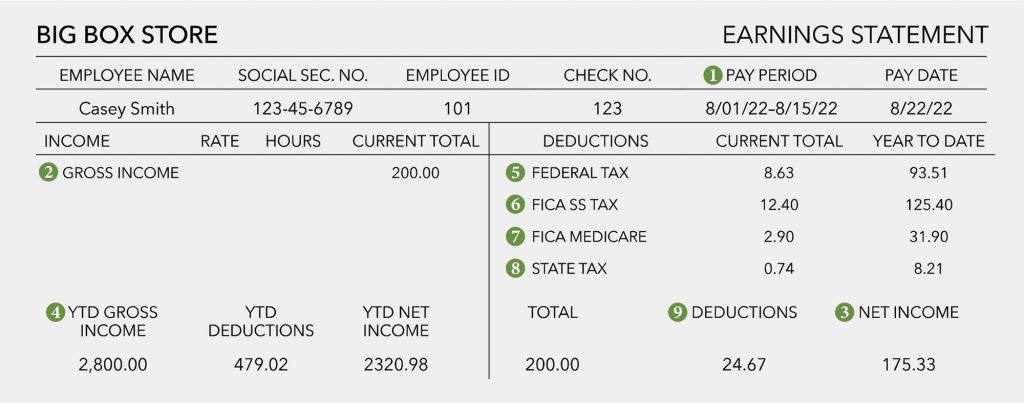
Now that you understand the parts of your pay stub, what should you do with it?
You should regularly review your pay stub for completeness and accuracy. Your employer is responsible for accurately reporting deductions for taxes, benefits, and other withholdings. You should check your pay stub for any missing overtime, bonuses, or reimbursements. If you spot an issue, you should contact Human Resources immediately.
The IRS suggests keeping record of your pay stubs for up to three years in case they are needed for an audit, tax correction, or other financial issues. Pay stubs are also useful when applying for loans, mortgages, rental applications, and government benefits.
As with any document containing personal financial information, you should have a safe way to store your pay stubs and dispose of them properly once you no longer have use for them. Paper copies should be shredded instead of tossed in the trash.
If you have any questions about direct deposit, switching Banks, depositing checks through online banking, or anything else, you can stop by one of our branch offices or reach out to our customer service team for more information.
 Megan Belnoski is the Branch Manager of our Claussville Office. She has been with the Bank for over 10 years and worked in deposit operations as well as branch operations, where she has helped customers with various finance-related issues every day. When she's not busy working, Megan enjoys spending time with her husband and children.
 Log into Online Banking